Manufacturing Biotech

Our Biotech facility is a center of excellence and the first site approved by the FDA for the production, packaging, quality control, release, and distribution of our drug cenegermin, based on recombinant human Nerve Growth Factor (rhNGF), for the treatment of Neurotrophic keratitis
Carousel round Manufacturing Biotech.jpg
The production of biotech active ingredients is divided into two phases:

Plasmid generation

A small circular DNA molecule, independent from the cell’s main DNA, which acts as a vector to insert into the bacterium the gene capable of expressing the desired compound, such as the protein proNGF, precursor of the active ingredient rhNGF.

The plasmid

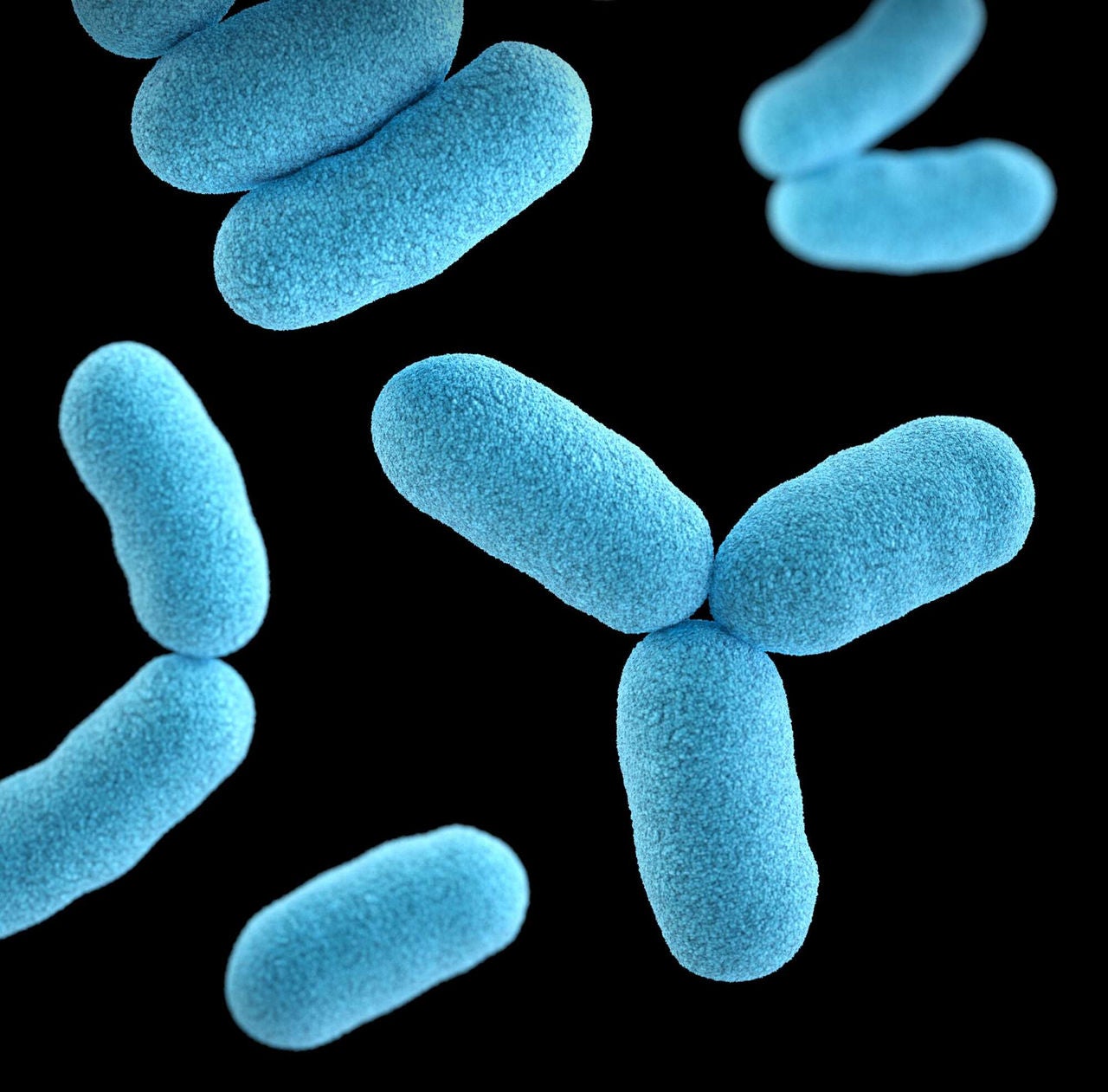
The plasmid is inserted into Escherichia coli, one of the most commonly used organisms in biotech manufacturing.

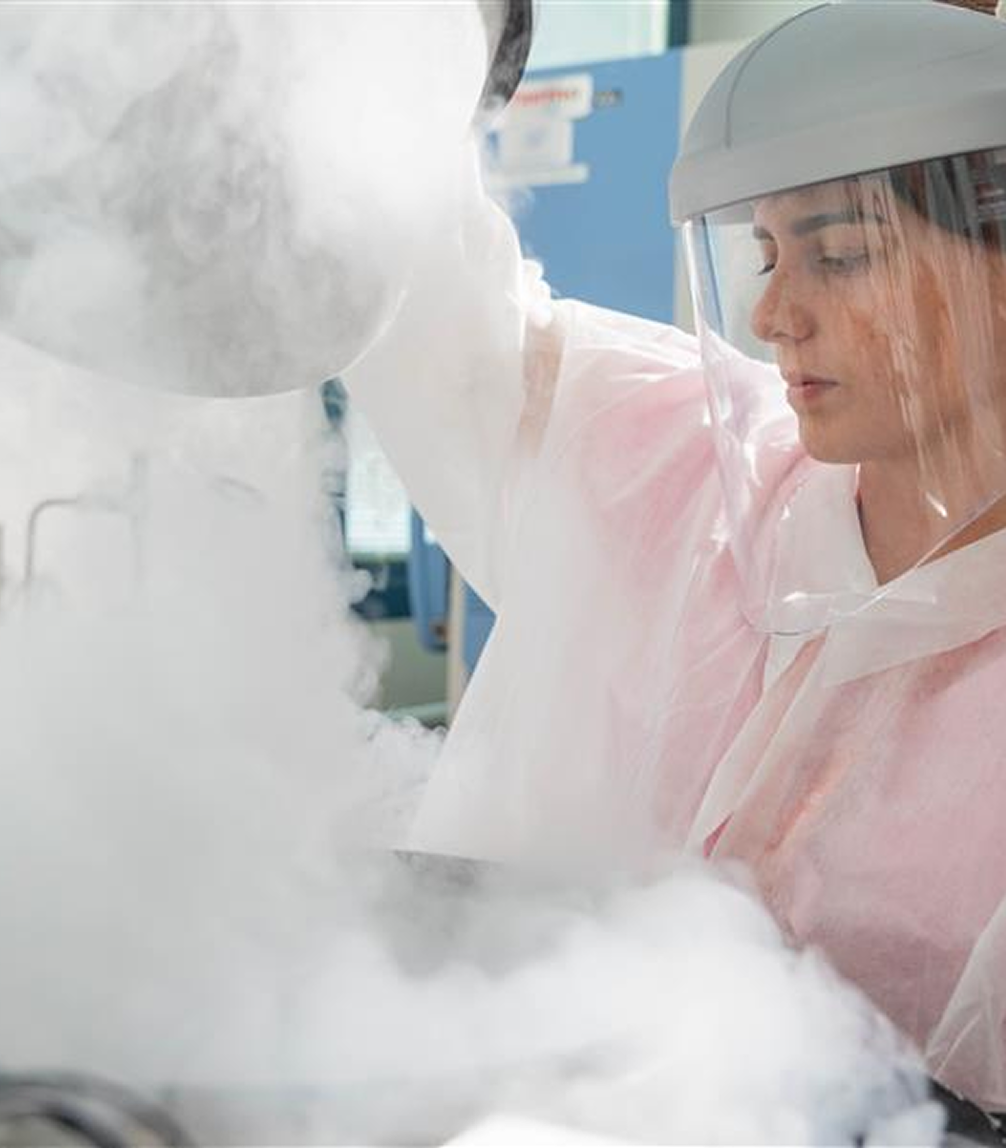
A clone, meaning a colony of identical cells used to generate cell banks, is selected and expanded starting from this phase. These cells are divided into several hundred vials containing genetically identical bacteria, forming the Master Cell Bank (MCB) and Working Cell Bank (WCB). They are stored at extremely low temperatures to ensure the stability of the recombinant strain throughout the entire product lifecycle.

The banks are housed in a dedicated storage facility equipped with cryogenic systems using liquid nitrogen (-173°C) or freezers (-70°C). Each cryogenic unit can hold up to 30,000 vials. As the starting material for all biotech production, the creation of a master cell bank requires deep expertise, meticulous attention to detail, and dedicated infrastructure and personnel. To ensure business continuity in the event of natural disasters, a portion of the cell bank is stored off-site.

Cell Culture and Fermentation

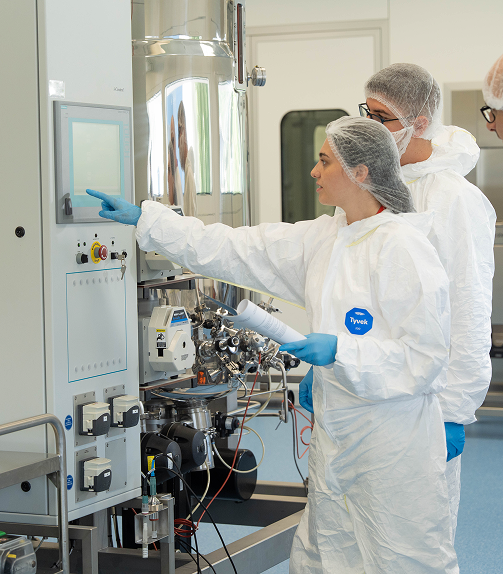
The production phase begins with the transfer of a portion of the cell bank into bioreactors, also known as fermenters. These are closed systems made of stainless steel that provide a sterile and controlled environment for the growth and activity of microorganisms, ensuring optimal conditions for the development of cellular biomass.

This process culminates in the production of the active ingredient, such as recombinant human Nerve Growth Factor (rhNGF).

Downstream

Purification and Formulation 

In the Downstream phase, the active ingredient is carefully purified using advanced separation technologies—such as chromatography and filtration—to ensure its quality, safety, and efficacy.

The entire production process spans several weeks and involves the expertise of highly specialized professionals, including biotechnologists and laboratory technicians.

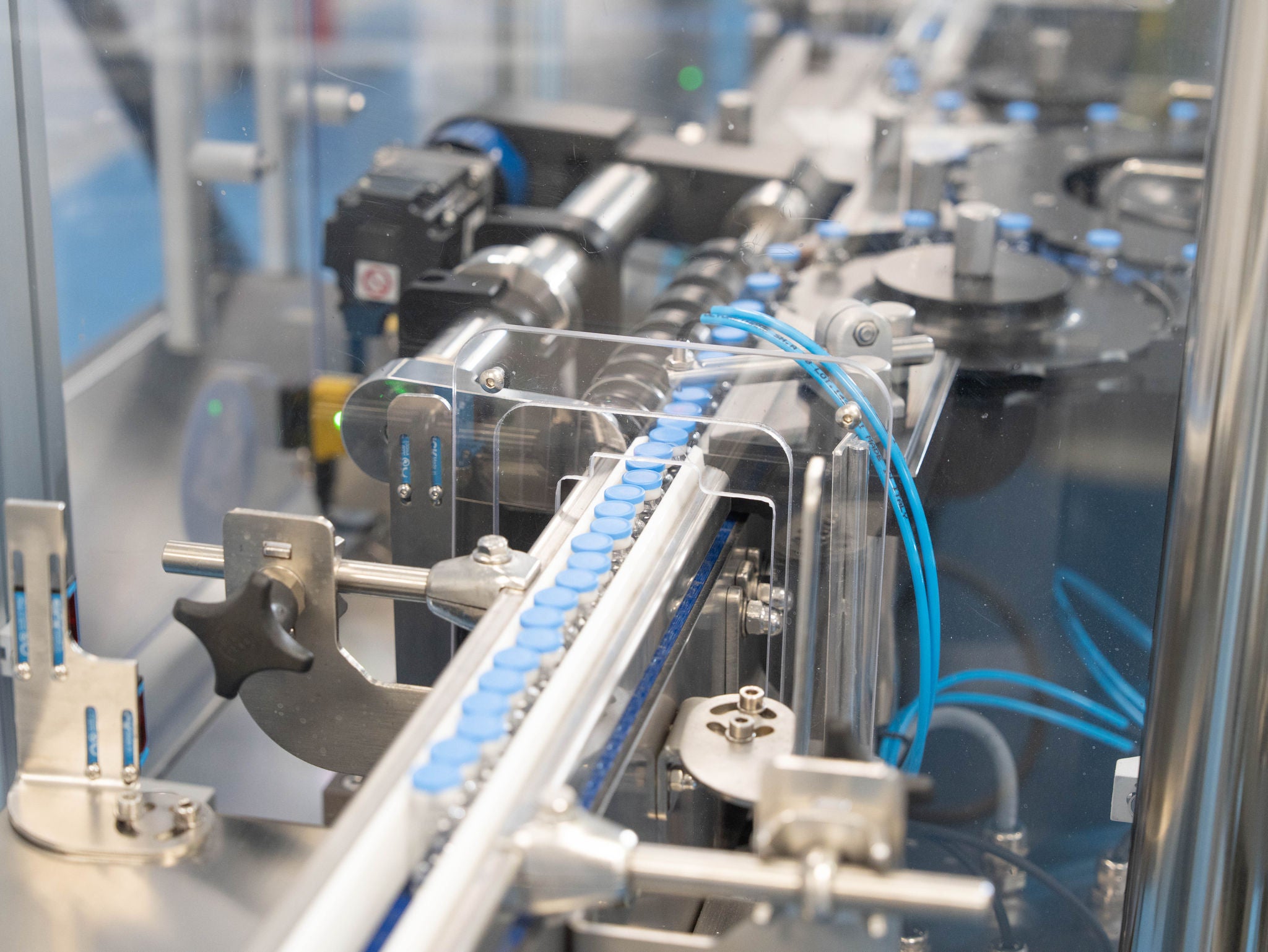
Following purification, the active ingredient undergoes formulation, sterilization, and aseptic filling (Fill & Finish), which are carried out by selected external partners. The sterile product is then returned to Dompé for final labeling and packaging before being distributed globally.
The Importance of the Cold Chain

Given the biological nature of the products, a critical and complex aspect of the production process is ensuring that active ingredients are maintained at controlled temperatures to prevent deterioration.

At the L’Aquila site, in addition to a central warehouse with a capacity of 5,000 pallet spaces, there are two storage areas at -20°C, totaling approximately 55 pallet spaces. The site is also equipped to store cell banks at -70°C and in liquid nitrogen environments (-190°C).

  • The presence of a cold chain ensures that products are distributed to patients under controlled conditions. The cold chain requires containers and pallets that are maintained at -20°C. All systems involved in the cold chain are equipped with temperature monitoring alarms that signal any detected variation.
  •  The Farma/Biotech facility in L’Aquila is also an ENAC-accredited center for the shipment of air cargo.

Innovative Biotech Production

In our Biotech manufacturing, we are adopting single-use technologies. We use single-use fermenters and centrifuges made from high-quality sterile plastic. The disposable separator prevents process contamination and significantly reduces the risk of cross-contamination.


These technologies allow us to produce different molecules within the same processing areas, enabling a flexible, multipurpose facility management approach. The system does not require sterilization or cleaning, which shortens the production cycle and reduces water, energy, and steam consumption.